In Conversation with Michal Rovner
Interview with the artist conducted by Artis in September 2026
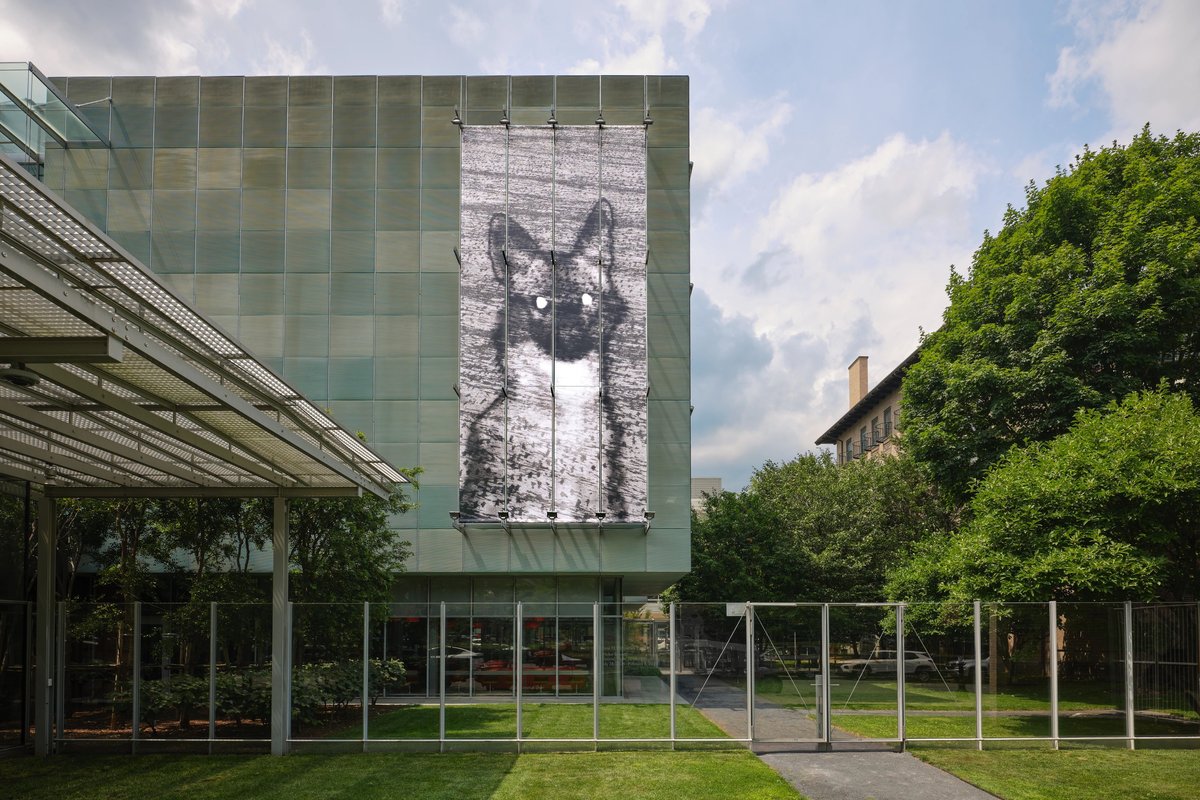
Michal Rovner: Untitled/Night, 2016. Anne H. Fitzpatrick Façade, July 28, 2026 – February 8, 2027. Isabella Stewart Gardner Museum, Boston.
In this interview, artist Michal Rovner discusses her presentation Michal Rovner: Esther Scrolls and Untitled/Night at the Isabella Stewart Gardner Museum in Boston, supported by an Artis exhibition grant. The artist reflects on the newly commissioned work for the museum’s facade and her exploration of the biblical story of Esther. Presented in dialogue with the exhibition The Book of Esther in the Age of Rembrandt, Rovner’s work draws on themes of concealment and resilience, capturing the universal resonance of a story of exile for multitudes of peoples across time.
Esther Scrolls and Untitled/Night is presented in dialogue with the exhibition “The Book of Esther in the Age of Rembrandt.” What have you learned from presenting your work alongside this exhibition?
I have always been intrigued by other layers of time, by images and objects that remain, and by the way they continue to affect us and become points of reference.
I am interested in how we relate to them, and how we can still find ourselves in stories, images, and characters that come from a different time.
We can stand in front of a painting from centuries ago, a sculpture from two thousand years ago, or even a prehistoric object, and suddenly feel something very present. We encounter someone who lived in another time, and we recognize something in them that we know from ourselves.
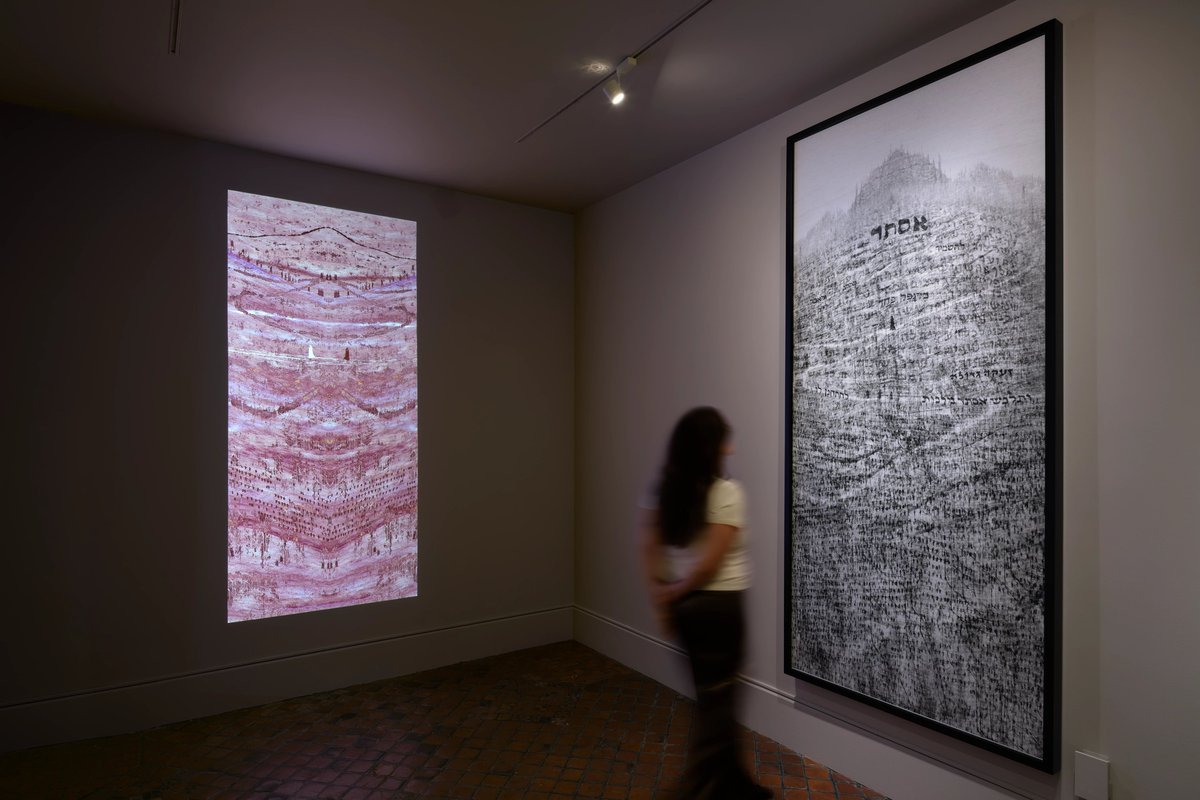
The exhibition "Michal Rovner: Esther Scrolls" in the Fenway Gallery, August 6, 2026 – January 18, 2027. Isabella Stewart Gardner Museum, Boston.
What did you discover in Esther’s story that felt especially relevant today?
It is an ancient story, but the emotions and situations within it feel very close to us today.
There is fear and anxiety, the threat of violence, but there is also beauty, love, courage and hope. These forces exist next to each other in the story, just as they do in life.
Perhaps this is why the story has survived for so long. Despite the passage of time, we recognize something of ourselves in it. It continues to touch the present.
How do the tactile and the digital work together in your interpretation?
What connects the three works is the figure of Esther, each work approaches the story through a different prism.
The pink tones video projection has the presence of a mural or a woven textile. It relates to the royal and magnificent side of the story, the love story, the rituals and ceremonies, the splendour of the Persian kingdom. Esther appears almost as two personas, through dark and light figures.
The vertical printed work moves toward the darker side of the Megillah, the existential threat and the fear. Certain words and phrases stayed with me, “for fear had fallen upon them,” “a great cry,” “to plead with the king.” I extracted these words from the text and emphasized them. Layers of writing accumulate and become a landscape made of words. The text dissolves downwards, into many tiny figures – the crowds under the threat. The black ink keeps dripping down on the scene.
The third work, a series of small prints on old Chinese paper, moves through different chapters in the story. Its format is closer to the traditional Megillah. I wanted to bring my work into the realm of Megillahs.
Together, they are different ways of entering the same ancient story and bringing it into the present.
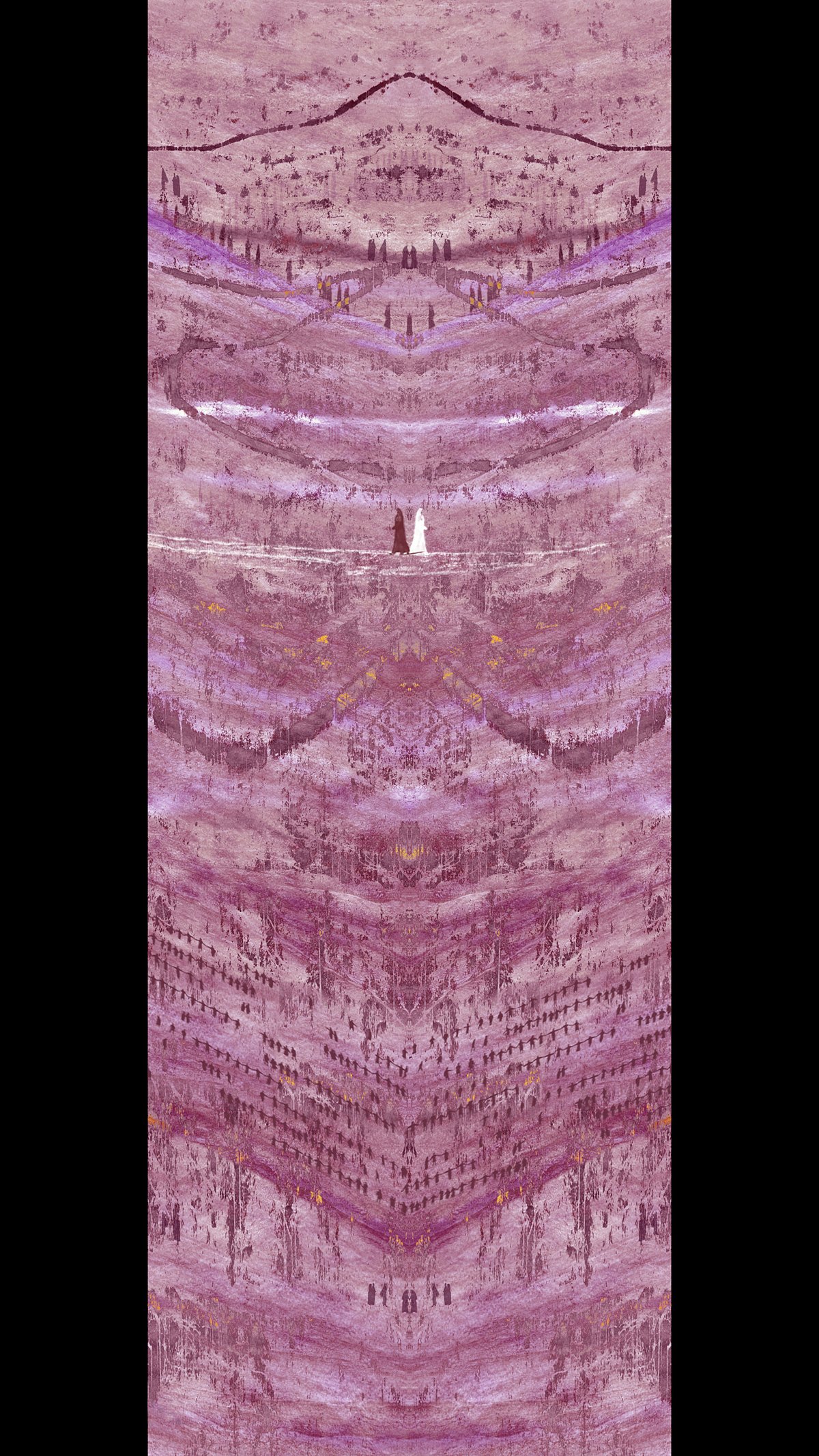
Michal Rovner, Esther Scroll: The Kingdom, 2026. Video projection. Courtesy of the artist and Pace Gallery.
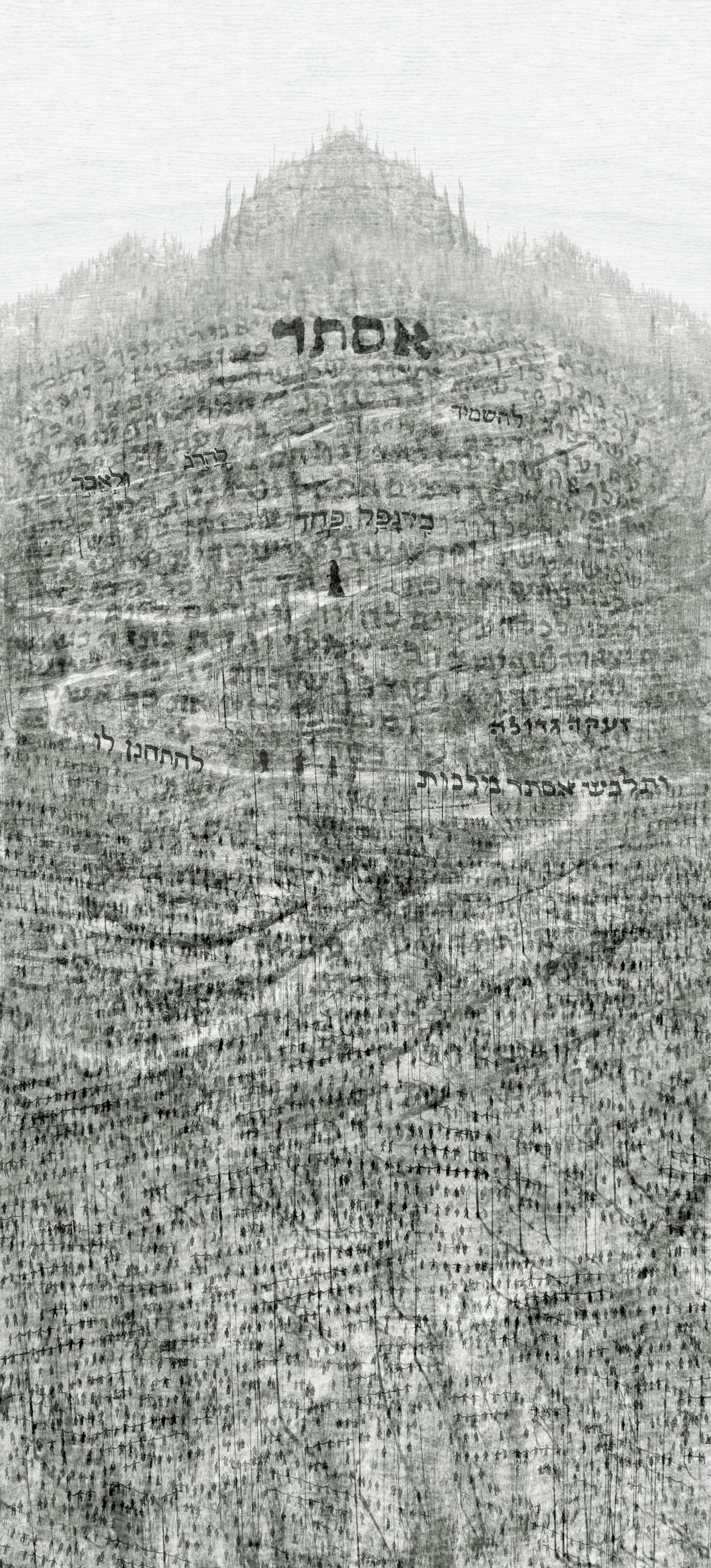
Michal Rovner, Esther Scroll: New Reflections, 2026. Archival pigment print. Courtesy of the artist and Pace Gallery.
