Assaf Gruber and Roee Rosen participate in the 2024 edition of steirischer herbst: “Horror Patriae,” with newly commissioned work for the festival. This large-scale group exhibition imagines a fictional national museum in Austria where staged encounters with historical narratives are held to raise awareness about contemporary issues, exploring and deconstructing notions of nationalism and identitarianism.
Roee Rosen presents a new series of photographs titled The Gaza War Tattoos, where simulations of tattoos are painted on bodies and then photographed. The images range from open-ended figurations of notions such as “witnessing” and “evidence” to graphic echoes of devastation and violence, while others draw from the nationalistic and military terminology bracketing the events, reflecting on its paradoxes and peculiar poetics. Fragmentary in their approach, the inscriptions constitute a troubled attempt to respond to a painful and emotional time, and consider the ways in which it is personally and collectively commemorated.
Assaf Gruber’s film, Miraculous Accident, addresses the notion of “the enemy” as it has been perceived in Europe throughout the 20th and 21st centuries. The film is inspired by the life of Moroccan poet and filmmaker Abdelkader Lagtaâ (who also participates in the film as the lead role) and imagines a micro-history taking place at the Łódź Film School in 1968, where a young North African film student falls in love with a Jewish teacher at the school. The film traces the student’s return to the same school in 2024 to create a film about this love story. Weaving into his work excerpts of student films made by Lagtaâ and his peers in the 1970s, Gruber merges past and present in new and unconventional ways.
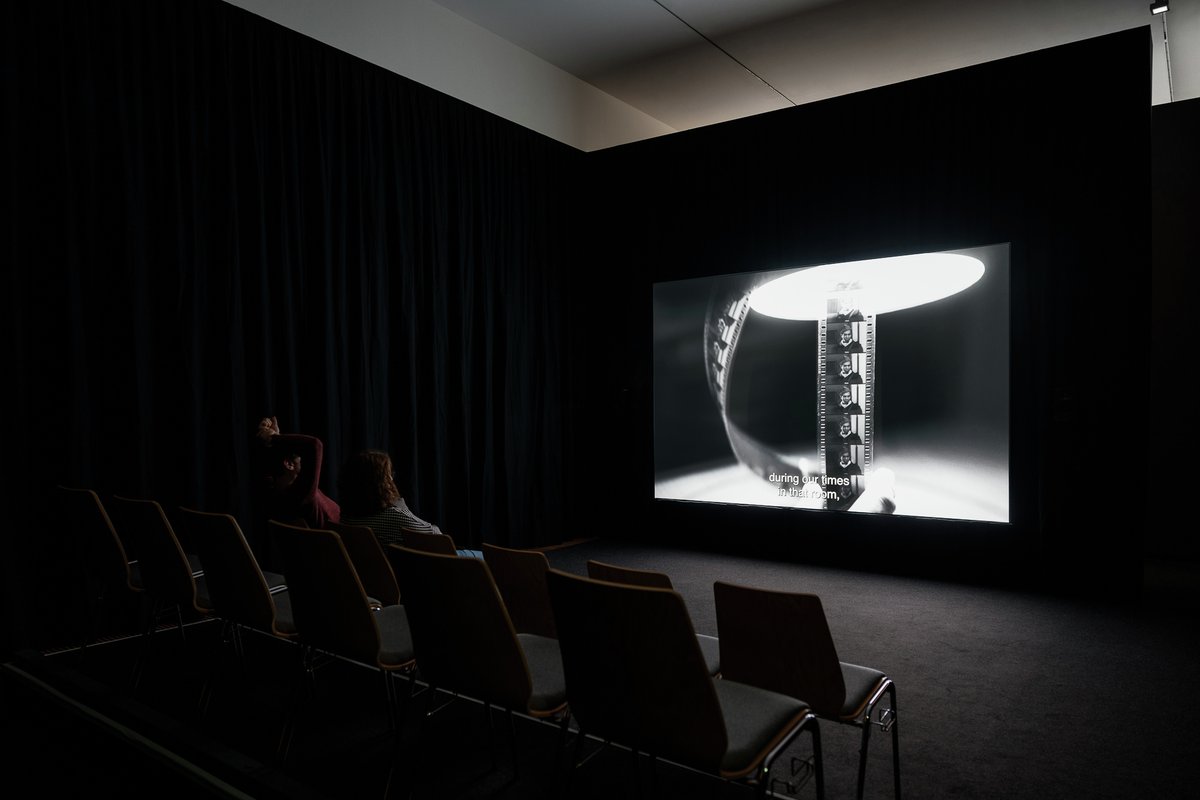
Assaf Gruber, Miraculous Accident, 2024, film, installation view.
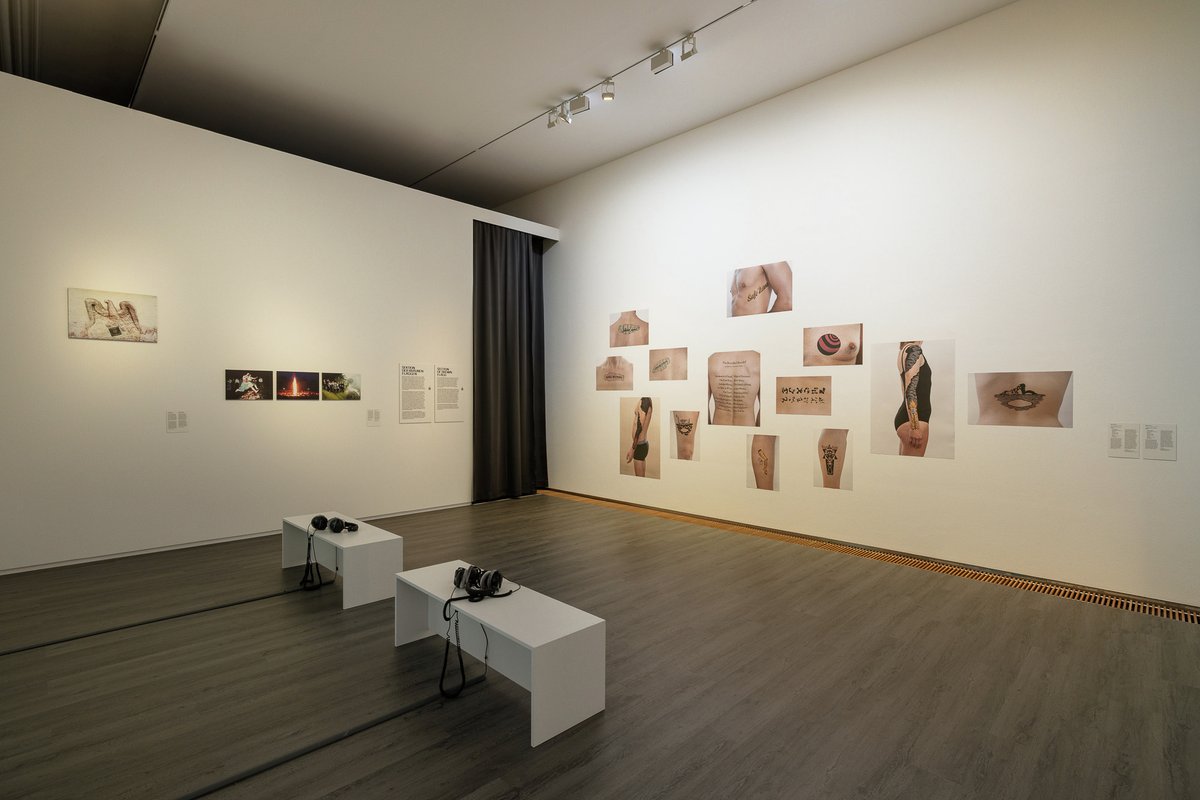
Roee Rosen, The Gaza War Tattoos, 2024, photo series, installation view.